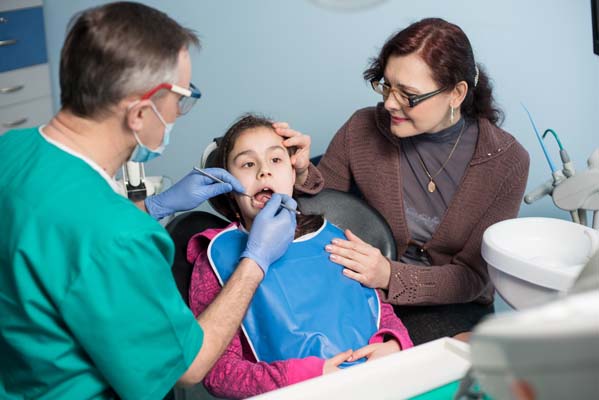
You may know that bringing your child to the dentist twice a year is important, but you may be less sure about when to see an emergency pediatric dentist. Some dental complaints may be able to wait to be treated, but certain symptoms and signs indicate that emergency treatment is necessary.
When to contact an emergency pediatric dentist
There are certain instances in which urgent dental care should be sought. If your child is experiencing any of the following symptoms, you should not wait for treatment.
Broken tooth
A tooth can break from a variety of activities, especially sports. If this occurs, you should gather the pieces of the tooth to bring along to the emergency pediatric dentist appointment. To protect the rest of the mouth, cover the edges of the remaining tooth with wax.
Cracked tooth
A tooth may have a crack but not be completely broken. A crack may not seem like a major deal, but it allows sugar and pieces of food to accumulate, which can quickly lead to tooth decay. You should especially seek emergency treatment if the crack is vertical or diagonal, as this can affect the tooth's root, which can be very painful.
Severe pain and pressure
A minor toothache that comes and goes can probably wait for a regular appointment. However, if your child complains of severe tooth pain, you should seek emergency dental treatment. This is especially true if the child is complaining of accompanying ear pain or pressure.
Knocked-out tooth
If a tooth is completely knocked out, it is important to get to a pediatric dentist as quickly as possible. With an older child, you can clean the tooth with warm water and then place it back inside the socket on the way to the appointment.
Loose or lost fillings
A filling may become loose or even come out entirely. If this occurs, you should see an emergency pediatric dentist get it replaced.
Orthodontic pain
If your child wears braces, there is commonly some pain and discomfort, especially after the wires are recently tightened. However, emergency treatment should be sought if the wires break or if there is unusual pain.
Dental abscess
A dental abscess is a sign of an infection inside the root of the tooth. Signs include swollen, red, or pussy gums, sharp pain, fever, and bad breath or a bad taste in the mouth. Emergency care is necessary to prevent the infection from spreading.
Conclusion
Numerous dental issues should not be ignored. If your child experiences any of these signs, you should see an emergency pediatric dentist as soon as possible. If your child has uncontrolled bleeding in the mouth; severe swelling and pain of the face; or an abrupt and painful injury to the jaw, teeth, or face, you should visit an emergency room or call 911 right away.
You should have dental issues treated as soon as possible, and some conditions warrant seeing an emergency pediatric dentist. If your child needs to be treated, give our office a call right away.
Check out what others are saying about our dental services on Yelp: Emergency Pediatric Dentist in Watertown, MA.
Recent Posts
Children's tooth care is an essential part of promoting strong teeth and healthy gums throughout your little one's life. When you work with a pediatric dentist, you can help your child establish habits when they are young. These foundational habits that support children's tooth care can prevent cavities, gum disease, and the need for expensive…
Using digital X-rays in pediatric dentistry is one of the simplest ways to assess children’s teeth for small changes over time and identify disease in the early stages. In addition to being easily accessible on a computer screen, digital X-rays are thought to be safer because these images require less radiation than traditional X-rays. Digital…
Kids' dental crowns protect weakened baby teeth so children can chew comfortably and speak clearly. When a cavity is too large for a filling, kids' dental crowns cover the remaining structure and restore everyday function. They also help maintain space for incoming adult teeth, which supports normal alignment and jaw development. A general dentist evaluates…
A children's dentist will tell you that tooth decay is the most common oral condition that affects kids. Any tooth can get tooth decay if it has erupted on the jaw, meaning that toddlers as young as six months can get cavities. This article provides information on the causes and prevention of tooth decay in…